 11
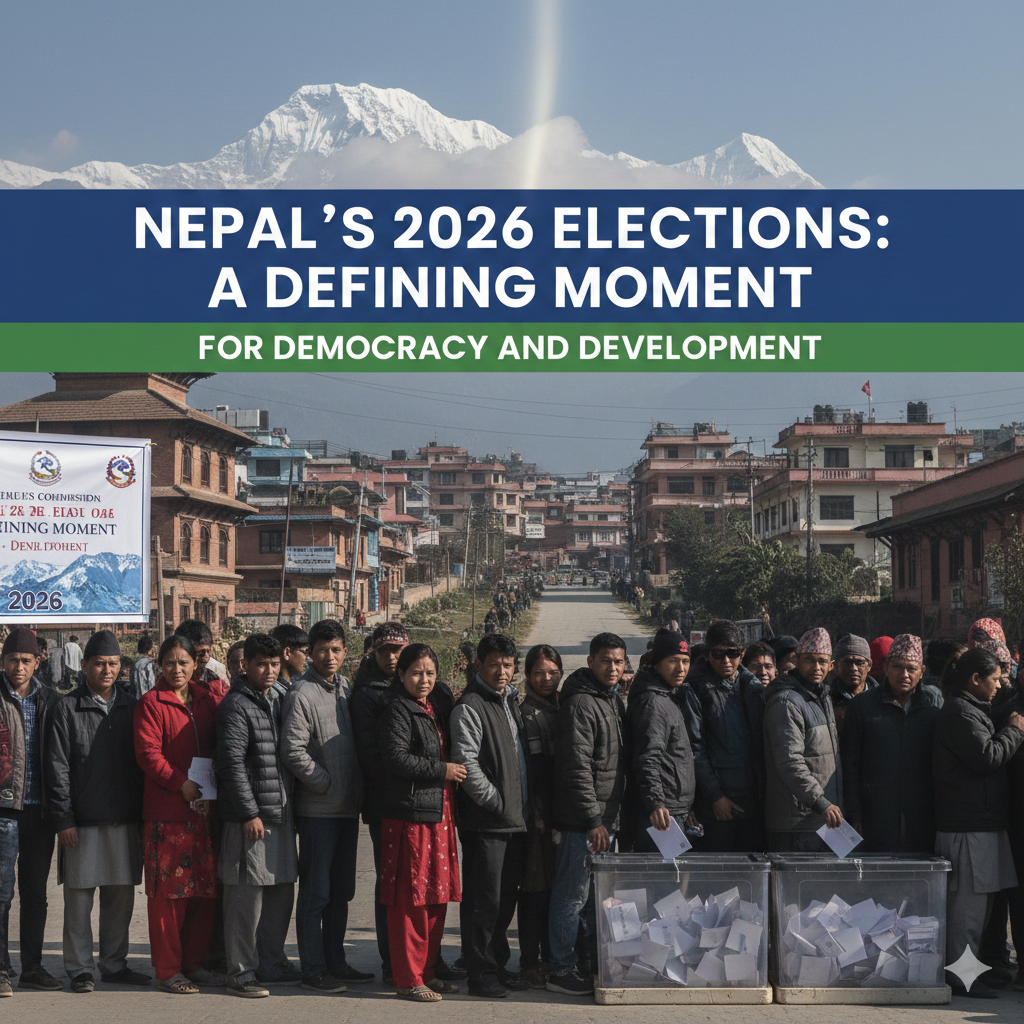
11 Nepal stands once again at a critical juncture in its political journey. With the upcoming elections in 2026, voters, politicians, and analysts across the country are intensely focused on the future of the nation’s democratic system, economic trajectory, and social cohesion. This blog explores the key dynamics shaping the election, the major political players, and what this pivotal contest could mean for Nepal’s future.
To understand the significance of the 2026 elections, it’s worth recalling Nepal’s recent political history. In 2008, Nepal abolished its centuries‑old monarchy and transitioned to a federal democratic republic. The journey since then has seen periods of political instability, frequent government changes, and debates over the balance between central and provincial powers.
The 2015 Constitution marked a milestone in structuring Nepal as a federal state with seven provinces, multiple levels of government, and expanded civil liberties. Yet implementation of federalism has faced challenges, including disputes over resource allocation, identity politics, and coordination between central and provincial authorities.
Against this backdrop, each national election becomes not just a contest for seats, but a referendum on governance, accountability, and the effectiveness of Nepal’s federal democratic experiment.
The 2026 elections in Nepal include:
Federal Parliament elections — electing members of the House of Representatives
Provincial Assembly elections
Local level elections in municipalities and rural municipalities
These elections are significant because they determine leadership not only at the national level but also across provinces and local units — affecting governance, development planning, public service delivery, and local empowerment.
The stakes are high. Nepal continues to grapple with issues such as unemployment, youth migration abroad, infrastructure needs, economic recovery following global shocks, and social equity across regions and communities.
Several political forces are central to the 2026 elections:
After splits and realignments in recent years, variants of the Nepal Communist Party remain influential — particularly the Communist Party of Nepal (Maoist Centre) and the Unified Socialist factions. These parties typically emphasize social welfare, state‑led development, and redistribution policies. Their appeal remains strong among certain rural constituencies and older voters.
As one of Nepal’s oldest democratic parties, the Nepali Congress continues to advocate for democratic pluralism, economic liberalization, and governance reforms. It appeals strongly to middle‑class voters, business communities, and urban constituencies. The party’s performance in these elections is often seen as a bellwether for the future of pro‑market reforms.
Nepal’s federal structure has enabled the rise of regional and identity‑based parties that represent Madheshis, Janajatis, Tharu communities, and other historically underrepresented groups. These parties can play kingmaker roles in coalition politics, especially when no single national party gains a majority.
Smaller parties and new political movements — particularly youth‑led, issue‑based, or anti‑incumbency groups — are contesting seats and attracting attention. Issues such as environmental protection, climate resilience, economic innovation, and digital governance are helping these groups find voice, especially among young and urban voters.
Several themes dominate campaign discourse:
Nepal continues to face youth unemployment, heavy reliance on remittances from labor migrants, and slow growth in industrial sectors. Political platforms vary: while some prioritize state‑led job creation and public investment, others emphasize private sector growth and skills development.
The federal system’s success depends on functional coordination between levels of government. Campaigns include debates on resource distribution, provincial autonomy, and local development priorities.
Transparency, accountability, and anti‑corruption measures feature prominently in political rhetoric. Voters are increasingly demanding mechanisms that ensure accountability at all levels of government.
Questions of representation — whether of women, marginalized communities, or minority groups — remain central. Parties tout different approaches to affirmative action, inclusive policies, and cultural recognition.
Improving road networks, healthcare access, education quality, and digital connectivity are core electoral promises. How parties plan to fund and implement these services is under close scrutiny.
Nepal’s demographic profile is young. Voters aged 18–35 constitute a substantial portion of the electorate. Their priorities — jobs, access to technology, quality education, and opportunities without international migration — are reshaping political messaging.
Social media campaigns, digital engagement, and grassroots youth mobilization are influencing the narrative like never before. From TikTok debates to Facebook livestreams of town halls, election discourse increasingly spans offline and online arenas.
Political parties that fail to engage meaningfully with youth concerns risk losing relevance — especially in urban centers where young voters are particularly active.
Election campaigns in Nepal are leveraging technology in new ways:
Data analytics to tailor local messaging
Mobile‑first engagement in rural areas
Citizen journalism amplifying local issues
Fact‑checking platforms countering misinformation
Yet challenges persist. Concerns about the spread of fake news, polarized commentary, and foreign influence campaigns have sparked discussions about digital ethics and electoral integrity.
Nepal’s Election Commission has increased monitoring and public awareness initiatives, but civil society advocates call for stronger digital literacy programs to help voters evaluate information critically.
In Nepal’s multi‑party system, it is unlikely that a single party will secure an outright majority. As a result, coalition governments are the probable outcome.
Coalition politics bring both opportunities and challenges:
Opportunities: Broader representation, inclusive policymaking, shared governance
Challenges: Policy gridlock, compromise‑driven agendas, and fragility
Voters will no doubt be watching which parties can form stable alliances and deliver on their promises without fracturing under pressure.
As elections approach, maintaining peace and order is crucial. Nepal has a long democratic tradition — but ensuring that all communities feel safe and free to participate is a continuous effort.
Security agencies, community leaders, and civil society groups are working to reduce tensions and safeguard communal harmony during the campaign period. Reports of isolated disputes have been investigated, and electoral observers from national and international organizations are on alert to support transparent and peaceful conduct.
Winning the election is only the beginning. Once results are announced:
Parties must negotiate coalition agreements
The new House of Representatives will form a government
Provincial and local bodies will begin legislative sessions
Budgets and development plans will be finalized for the next five years
This is where campaign promises meet the reality of governance. Implementation, accountability, and performance will define not just the next government’s success, but the public’s faith in democratic institutions.
The 2026 election is more than a political event — it is a reflection of Nepal’s evolving identity:
A diverse society striving for equitable representation
A young population demanding opportunity
A federal system seeking stability and coherence
A nation balancing tradition with modern aspirations
For Nepalis across villages and cities, the election is a chance to affirm democratic values, set development priorities, and shape the nation’s direction for years to come.
As the ballots are cast and voices heard, Nepal’s democratic journey continues — driven by its resilient people and their steadfast commitment to progress.